


When an auditor walks through your facility doors, they bring more than a checklist, they bring questions about whether your people really know how to do their jobs the right way. One of the first things they look for is evidence that your staff have been properly trained and that those training certificates are complete, current, and connected to each person’s actual work.
Training records might seem like a small detail, but they can make or break your GMP audit. A missing certificate or an expired refresher can raise questions about how seriously your team takes compliance and whether you really follow your own quality system.
In this guide, you’ll see exactly why training certificates matter so much, what auditors expect to find, and practical ways to make sure every file stays up to date, so you can face your next GMP audit with confidence.
GMP regulations are built on the idea that people, not just processes, protect product quality. A robust quality system depends on operators, supervisors, managers, and support staff who understand exactly how to do their jobs in line with SOPs, regulations, and good practices.
Certificates are the visible proof that this knowledge is there. They show that each team member has been trained on tasks they actually perform, that the training was delivered by someone qualified to teach it, and that it was assessed in a meaningful way.
Auditors will not accept a stack of generic sign-in sheets as enough. They expect to see training certificates that match the employee’s role, show clear dates, and prove that refreshers are given when processes or regulations change.
If you want to feel confident when an inspector asks for training records, here are the core points you should check regularly:
1. Role-Specific Records
Every training certificate should match what that person does in their day-to-day work. A production operator’s records will be different from a validation engineer’s or a QA manager’s. One-size-fits-all courses may look convenient but rarely hold up to questioning.
2. Dates and Validity
Certificates must show when training was completed and, if relevant, when it expires. Many companies use annual or biennial refreshers to keep knowledge fresh. If a process changes, the training should be repeated immediately and documented.
3. Trainer Qualifications
Regulators often ask who delivered the training and how they were qualified to do so. Certificates should include or be connected to information about the trainer’s credentials, especially for technical topics like validation, aseptic techniques, or regulatory updates.
4. Assessments and Evidence
An effective training certificate should show that knowledge was checked. That might be a quiz result, a practical demonstration, or an observed sign-off. If you cannot prove that staff understood the content, the certificate can look meaningless.
5. Document Control
Training records need to be controlled just like any other GMP document. This means version control, restricted access, and a clear audit trail of any changes or updates.
Checking these details regularly helps you catch small gaps before they turn into big inspection findings.

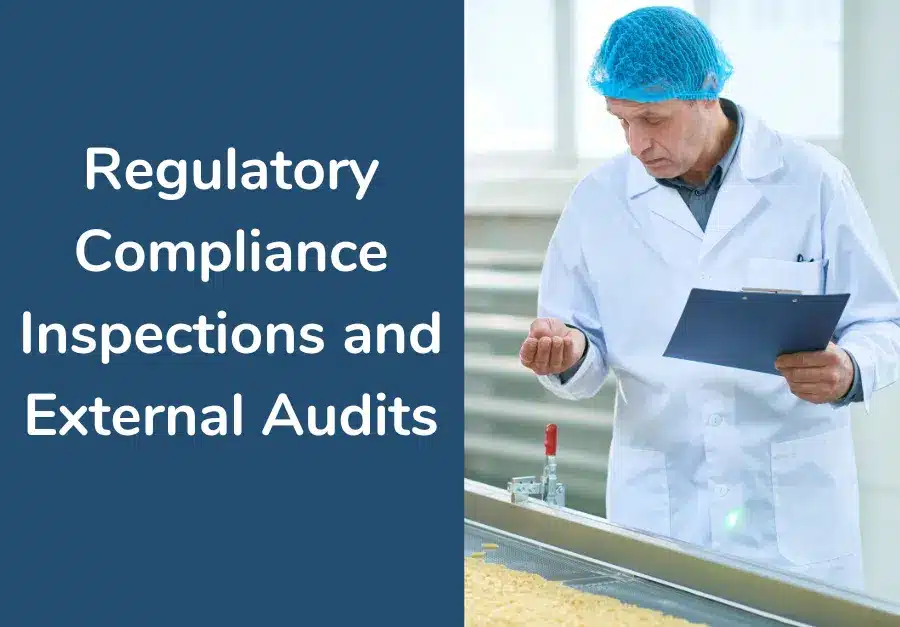
When an inspector asks to see training records, you need more than a generic sign-in sheet. You need clear proof that your team has the right knowledge for their role and that those records stand up to scrutiny. Our GMP-focused training, including the Regulatory Compliance Inspections and External Audits course, helps you build a certificate trail you can trust.
Each course is designed by industry experts who know what regulators look for. Lessons focus on practical skills, real-life examples, and clear guidance your team can actually use on the job. Every module includes an assessment to make sure knowledge sticks, and all certificates are dated, traceable, and CPD or CEU accredited so you can show your records meet GMP standards.
Key features include:
Keeping your certificates up to date is easier when your training is designed to work in the real world
Many companies have solid training programs on paper but still run into problems during inspections because small details slip through the cracks. One of the most common issues is when employees take on new tasks but never receive updated training to match. This can easily happen when people move between departments or pick up extra responsibilities.
Another problem area is incomplete certificates. An otherwise good record loses value if it is missing basic details like training dates, the trainer’s name, or a clear description of what was covered. Sometimes training happens informally, with verbal instructions or on-the-job coaching, but there is no proof that it ever took place. Without documentation, it does not count in the eyes of an auditor.
In some businesses, records are all over the place. Different formats, inconsistent sign-offs, or duplicate files make it difficult to show a clear training history for each person. Expired certificates are another issue. They might still be sitting in a folder long after they should have been renewed, which leaves an obvious gap in compliance.
One of the simplest ways to catch these problems early is to build regular checks into your routine. Many teams hold quarterly file reviews to make sure every training record is complete, up to date and easy to trace. It is a small step but it shows you take your quality system seriously, and it makes inspections a lot less stressful when they come around.d current. This simple habit can make a big difference when you are facing a surprise inspection.
Auditors do not look at training certificates just to see if they exist. They study them to understand whether your people are genuinely prepared to do their jobs well. If certificates are incomplete or out of date, it signals that other parts of your quality system might be disorganised too. That one gap can open the door to deeper questions about whether your processes, documents and day-to-day operations are being managed the way you claim.
Good training records tell a different story. When your certificates clearly show what each person learned, who trained them and when, you are proving that your team has the knowledge they need for their roles. This also builds confidence. When staff know they can back up what they say with well-kept records, they answer audit questions with less stress and more clarity. That makes a big difference when an inspection gets detailed.
A solid training program also helps people connect the dots between what they learn and what they do. They can explain why a procedure exists, when it should be used, and how it ties into GMP principles. This makes answers stronger and shows that you are not just checking boxes but actually building good habits on the job.
For managers, clear training records give peace of mind. You can spot gaps before an inspector does and plan refreshers when a process changes. You know which teams might need extra support and you can fix small issues early. Over time this builds a routine of continuous improvement, not just a scramble right before an audit.
When everyone understands that training is a tool for doing the job well, not just another requirement, you get a culture where people take ownership of their work. This is what regulators want to see: proof that you take GMP seriously and that you can stand behind every certificate you show.
Our Regulatory Compliance Inspections and External Audits course gives your team the practical tools to keep training certificates accurate and audit-ready, so you can show inspectors exactly what they need to see.
If you want extra support building a system that stays strong all year, explore our wider training library or reach out to see how we can help your team feel prepared every day.


