

Clinical research often feels like a high-stakes puzzle where every piece must fit perfectly. However, a significant disconnect frequently occurs when biological samples move from a clinical site to a diagnostic laboratory. A Phase III trial once came close to collapse because a specialty lab treated human samples like standard non-clinical materials. The technicians were skilled, but without GCLP training, they failed to maintain the chain-of-custody requirements that regulators demand for human data. That single oversight put the entire drug submission at risk. It is a scenario that plays out more often than the industry acknowledges, and it points to a critical reality: standard laboratory practices are simply not enough when human lives and trial integrity are on the line.
Good Clinical Laboratory Practice (GCLP) serves as the vital bridge between Good Clinical Practice (GCP) and Good Laboratory Practice (GLP). While GLP focuses on non-clinical safety studies and GCP governs the treatment of human participants, GCLP ensures that laboratories analyzing clinical samples meet both sets of standards. Regulatory bodies are currently increasing their scrutiny of trial data generated in labs. Therefore, organizations must implement GCLP online training to ensure every staff member understands the ethical and technical burden of analyzing human samples.
A common point of confusion exists regarding where one set of regulations ends and another begins. Non-clinical labs use GLP to ensure the reproducibility of safety data in animals or in-vitro systems. GCP, on the other hand, ensures the rights and safety of human participants at the clinical site. GCLP bridges both frameworks by taking the rigorous quality systems of GLP and applying them to the clinical setting defined by GCP. When a lab analyzes a patient’s blood, tissue, or DNA, the data becomes a core part of the clinical evidence. Consequently, the lab must prove that the sample remained stable and traceable from the moment of collection until the final report.
Without FDA GCLP training, lab staff might overlook the unique requirements for human samples. For instance, human data requires strict patient confidentiality and specific informed consent protections. If a lab analyzes a sample for a purpose the patient did not authorize, they commit an ethical violation. Moreover, the technical validation of methods must be “fit-for-purpose.” This means the lab must prove the method is accurate for the specific patient population in the trial. This level of detail is why a specialized GCLP training online program is the gold standard for compliance.
Maintaining a compliant laboratory requires more than just high-tech equipment. It requires a robust quality management system that permeates every level of the organization.
The primary pillars of GCLP your team must master include:
To support the growing needs of modern clinical laboratories, GxP-Training provides an internationally recognized GCLP training program. This course helps you gain the knowledge to implement GCLP principles and manage laboratory operations in full compliance with global regulatory requirements.
Course Specifications
This program was built by a team of Regulatory Affairs Experts with qualifications from Northeastern University, Boston. It provides a synthesis of the topic through an engaging online experience, ensuring your team produces reliable, audit-ready data.
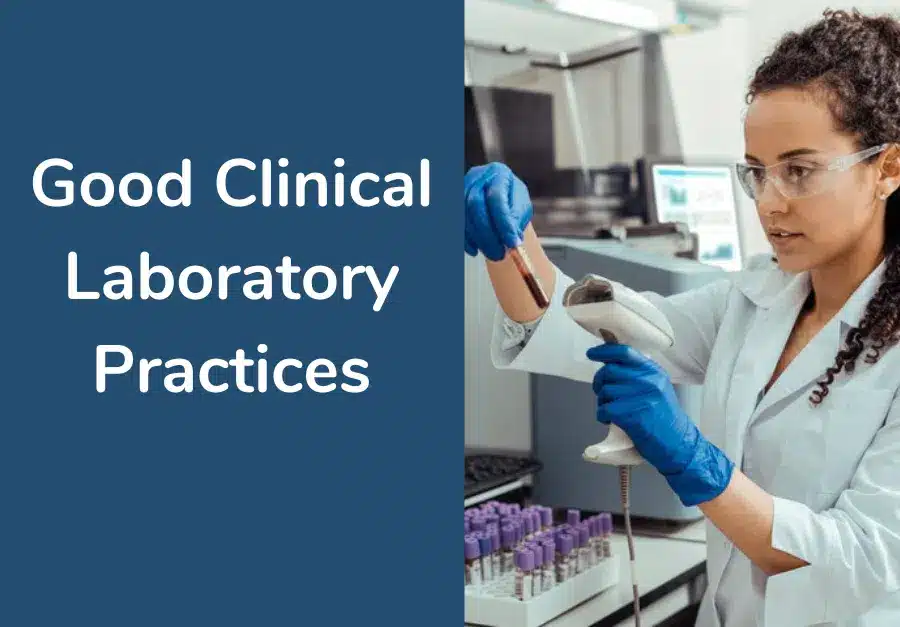
Detailed Curriculum Overview
By completing this GCLP online training, participants receive a dated, traceable, and downloadable certificate. This certification is globally acknowledged and serves as vital evidence during regulatory inspections.
In a clinical laboratory, quality is a shared responsibility. While the laboratory manager often leads the compliance effort, every person who touches a sample or a data point must understand the GCLP framework.
When these roles share a common understanding of GCLP, the risk of data silos disappears. Instead of pointing fingers when a sample goes missing or a result looks skewed, the team works together using a standardized set of rules. This collaborative approach turns a high-pressure trial environment into a streamlined, efficient operation where everyone takes pride in the accuracy of their work.
Regulatory bodies like the FDA and EMA do not accept “we didn’t know” as an excuse for poor data integrity. In 2026, the cost of non-compliance is higher than ever. A single failed audit can lead to rejected trial data, massive fines, and irreparable damage to an organization’s reputation. Consequently, FDA GCLP training is a vital investment in the future of your research.
Our platform allows your staff to access these lessons 24/7. This flexibility ensures they can stay up-to-date with current regulatory body recommendations without disrupting their vital laboratory work. Moreover, HR managers can track progress and send automatic reminders, making compliance management a seamless part of the workflow. Ultimately, GCLP training online transforms a laboratory from a mere service provider into a trusted partner in the quest for new medical treatments. When your data is audit-ready and your team is certified, you provide the credible outcomes that both regulators and patients depend on.