

For many years, the pharmaceutical industry operated under a dangerous misconception. Many believed that if the final laboratory tests passed, the product was high quality. However, decades of industry experience have thoroughly dismantled this assumption. As one senior quality manager put it: ‘We have seen batches pass every final test while still harboring underlying process weaknesses that eventually led to market complaints.’ Testing a product does not create quality; it only confirms whether it already exists. Therefore, true quality requires a holistic approach that starts with the very first raw material and continues through every stage of the lifecycle. This mindset shift is exactly why pharmaceutical quality training has become the cornerstone of modern medicine.
To achieve “fitness for use,” companies must build quality into the end product through every stage of production. This effort begins with sourcing high-quality raw materials. Furthermore, it requires teams to subject systems and equipment to routine evaluations. Analyzing feedback from these evaluations and from end users surfaces the data needed to improve the manufacturing process. This systematic approach is the heartbeat of the ICH Q10 guideline. ICH Q10 describes a comprehensive model for an effective pharmaceutical quality system. It bridges the gap between regional GMP requirements and modern quality management concepts. Without a robust system, an organization simply cannot maintain the consistency required in 2026.
The ICH Q10 guideline does not replace existing regulations. Instead, it enhances them by providing a harmonized model for the industry. It applies to drug substances and drug products throughout the entire product lifecycle. This includes pharmaceutical development, technology transfer, commercial manufacturing, and product discontinuation. Notably, the guideline emphasizes that senior management must demonstrate a strong commitment to quality. Without leadership buy-in, even the best pharmaceutical quality systems training will fail to take root in the corporate culture.
Management holds the responsibility for the design and implementation of the Quality Management System (QMS). Specifically, they must ensure that the organization possesses the necessary resources, including personnel, facilities, and equipment. In addition, they must define clear roles and responsibilities. When everyone knows exactly what management expects of them, the risk of human error drops significantly. To reach this state of operational excellence, companies often utilize the following four core elements of the ICH Q10 model:
A recurring challenge in the industry is the confusion between Quality Assurance (QA) and Quality Control (QC). While both departments work toward the same goal, their methods and focus differ. A useful analogy: QC is the ‘detective,’ while QA is the ‘architect.’ QC focuses on testing and measuring the product. In contrast, QA focuses on the systems that ensure the product is made correctly every time. Because these roles are so distinct yet interdependent, pharmaceutical quality assurance training and pharmaceutical quality control training are both necessary for a functional plant.
Understanding these differences is vital for operational harmony. When a production operator understands the “why” behind an IPQC check, they become an active participant in the quality mission. This is why pharmaceutical quality control training courses are not just for lab technicians; they provide valuable context for everyone on the manufacturing floor.
To help your organization master the complexities of modern quality systems, GxP-Training offers a high-impact foundational course. This program was built by a team of Regulatory Affairs Experts with qualifications from Northeastern University, Boston. It is also delivered by senior practitioners who bridge complex technical theory and day-to-day manufacturing practice.
Course Specifications
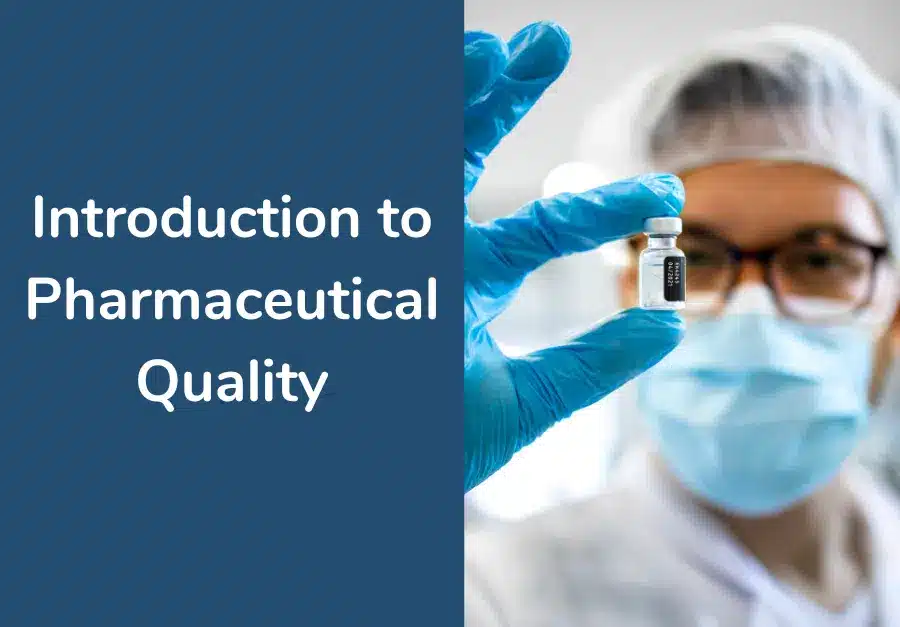
This pharmaceutical quality training module introduces students to the concepts of the Quality Management System (QMS) and Total Quality Management (TQM). It provides a deep dive into the role of ICH guidelines in achieving quality through a process-driven approach.
Detailed Curriculum Overview
The transition to a state-of-the-art facility often involves the implementation of Total Quality Management (TQM). TQM is a management philosophy that focuses on continuous improvement and customer satisfaction. However, many companies fail to implement TQM because they treat it as a temporary project rather than a permanent cultural shift. The most successful sites consistently provide ongoing quality assurance training to every level of staff.
Successful TQM implementation requires the “6Cs”: Commitment, Culture, Continuous Improvement, Cooperation, Customer Focus, and Control. Notably, cooperation is the most difficult “C” to achieve. It requires breaking down the silos between departments. When the warehouse staff, the production team, and the QC lab all work toward a single quality goal, the results are transformative. Training that emphasizes cross-functional communication is therefore essential for long-term TQM success.
In the 2026 regulatory landscape, “Quality by Design” is no longer a luxury; it is an expectation. QbD is a systematic approach to development that begins with predefined objectives. It emphasizes product and process understanding and process control based on sound science and quality risk management. By using tools like the Design of Experiments (DoE) and Process Analytical Technology (PAT), manufacturers can design processes that are inherently capable of meeting quality targets.
The primary objective of QbD is to identify the Critical Quality Attributes (CQAs) of the drug product. Once you understand these attributes, you can design a control strategy that ensures the product remains within the desired range. This proactive approach reduces the likelihood of batch failures and significantly improves process capability. Investing in pharmaceutical quality systems training that covers QbD principles ensures your technical teams have the tools they need to innovate safely.
Beyond the legal requirement to follow ICH Q10, there is a massive business case for quality. A robust QMS reduces waste, minimizes rework, and speeds up time-to-market. When you build quality into the process, you spend less time investigating deviations and more time producing life-saving medicines. Moreover, a high-quality reputation is a competitive advantage. Healthcare organizations and patients trust manufacturers that can demonstrate a consistent commitment to safety and efficacy.
Our platform makes it easy to stay compliant. We provide one-year access to our courses and update content every month to remain valid alongside the latest regulatory recommendations. Whether you are an individual professional or an HR manager looking for pharmaceutical quality assurance training courses, GxP-Training offers the expertise and flexibility you need. Our certificates are LinkedIn compatible and verified through an online checker, providing immediate proof of your competency. Ultimately, quality is not a destination; it is a continuous journey. By choosing the right education today, you are ensuring a safer, more efficient, and more compliant future for your organization.