

If you’ve spent any time at all on a manufacturing floor or in a sterile suite, you know that the most expensive mistakes rarely involve a sudden machine failure. The real risks usually come from a person making a split-second decision without fully grasping the ripple effect it has on the finished product. I once worked with a production team in a sterile fill area that was constantly running into issues during internal audits because their documentation was routinely behind schedule. It took a targeted GMP training overhaul for them to understand that the documentation is the work. Once they realized how a single missing signature could lead to a finding, the mindset changed immediately.
Good Manufacturing Practice (GMP) prevents the healthcare industry from falling into disarray. It provides the guidelines that guarantee every single tablet, vial, or medical device is made the same way every single time. In this industry, we cannot simply test the final product and hope for a good result. Quality must be built into every minute of the process. This is far more than just following rules because they are part of a regulation. A GMP training program helps your team move from a reactive state to a proactive quality culture where every employee understands the weight of their decisions.
Managing risk is at the center of any manufacturing operation. In a lab or a factory, things can go wrong in a thousand different ways. You might deal with cross-contamination from a previous run, a label swapped by mistake, or a technician who forgets to follow a hygiene protocol. These aren’t minor inconveniences. In the pharmaceutical world, they can be life-threatening. A comprehensive GMP training course curriculum teaches people that these regulations exist for a reason. They cover the entire lifecycle of a product, from where you buy raw materials to how you keep a sterile facility and prove that your equipment functions as intended. It is a total system of control designed to leave nothing to chance.
According to the European Medicines Agency (EMA), any manufacturer producing medicines for the EU market must comply with EU standards, regardless of where their facility is located globally. The EMA makes it clear that these guidelines are in place to ensure products are appropriate for their intended use and consistently meet the requirements of their marketing or clinical trial authorizations. You can find the full overview of these regulatory expectations on the EMA Good Manufacturing Practice page.
GMP compliance training strategy is how global businesses stay aligned with these high-level expectations and keep their license to operate.
A common misconception is that only the people wearing gowns on the production line need to worry about compliance. In reality, GMP training course content is relevant for almost every department in a life sciences company. If you are in Quality Assurance or Quality Control, you are the front line for catching deviations. You need to know these rules better than anyone to conduct audits and manage CAPAs. However, consider the maintenance and engineering teams. If they design a piece of equipment that is impossible to clean thoroughly, they’ve created a permanent hazard.
Even the procurement team needs to understand these principles so they don’t accidentally buy materials from an unvetted vendor who doesn’t meet the required standards. Senior leadership also needs to be involved. If the people at the top don’t understand the regulatory burden, they won’t provide the budget for the right tools or the time for staff to do things correctly. Compliance starts with a commitment from the boardroom down to the loading dock. Using high-quality GMP training programs makes sure that everyone from the CEO to the floor operator understands their personal responsibility in the manufacturing chain.
When a company commits to a GMP training program, they are protecting the business from the catastrophic impact of a warning letter, which can halt production for months and damage shareholder value. Leaders must recognize that technical skill is only half the battle. If a team doesn’t understand the rigors of a GxP environment, they are a liability to the organization. Proper education shows a respect for the gravity of the work. We are making products that people rely on to stay healthy. That responsibility requires a specific mindset that only comes from consistent, high-level education.
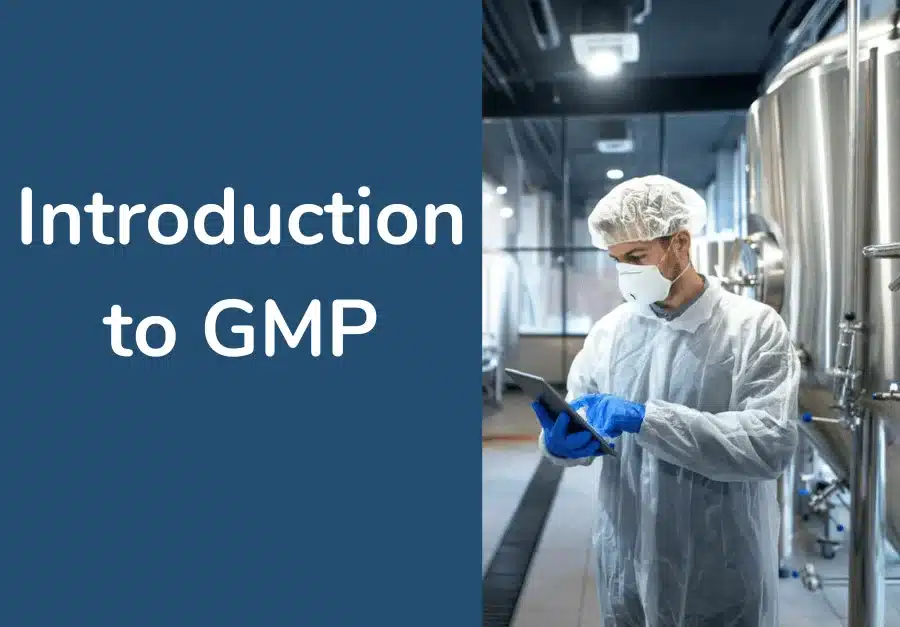
For organizations looking to bridge the gap between regulatory theory and floor-level practice, GxP-Training offers an online GMP training solution. This program was built by a team of Regulatory Affairs experts. It was piloted by senior professionals who understand the nuances of a high-pressure manufacturing environment and can articulate theory with practical application.
Operational Specifications and Accreditation:
This GMP training certification provides a synthesis of the latest requirements for quality healthcare products. It covers the application of these rules to both hardware and software systems used in Manufacturing, QA, Regulatory, and Process Control. The course includes one-year access and is updated annually to remain valid with the latest regulatory recommendations.
A functional GMP training program must be comprehensive to be useful. To make our syllabus easier to digest, we have organized the 13 lessons into six core functional areas. This makes sure that your team understands the entire lifecycle of a pharmaceutical product without feeling overwhelmed by the technical density of the regulations.
The first phase of the curriculum focuses on the baseline requirements for any regulated site. Organization and Personnel covers the specific qualifications and experience required for key roles, while placing a heavy emphasis on personal hygiene and individual responsibility. The goal is to understand how facility design prevents mix-ups and provides a truly controlled environment for Quality Control labs.
Equipment Design and Construction teaches the importance of cleanability, equipment location, and the construction materials that prevent product contamination. This lesson also covers equipment identification and the necessity of accurate logs. Alongside this, the Materials Management System module teaches the lifecycle of every ingredient, from purchasing raw materials to managing packaging, ensuring no sub-standard components ever reach the production line.
At the heart of any GMP compliance training is the Quality Management System (QMS). In this section, we explore Quality by Design (QbD), risk management, and risk assessment. We place a big focus on the Corrective and Preventive Action (CAPA) system, which is usually the first place an auditor looks during an inspection. This framework supports Manufacturing Operations and Control, where we focus on the identity, strength, safety, and purity of the product by teaching staff how to follow batch records with absolute precision.
The Documentation and Records module covers the preparation, issue, use, and disposal of documents, as well as the importance of product traceability. This is followed by Pharmaceutical Validation, which provides the documented assurance that a process will consistently meet its specifications. We cover everything from analytical test methods and instrument calibration to cleaning validation, giving your team the tools to prove that your processes actually work.
Modern manufacturing often involves a complex web of partners. The Outsourcing and Contract Management module addresses the quality requirements for third-party manufacturing and analytical services, helping you manage the contract giver and acceptor relationship. We also address Post-Operational Activities. Your team will learn about distribution standards, managing recalled or returned products, and the proper way to handle complaints and adverse events.
The final portion of the GMP training curriculum addresses the long-term safety and security of the operation. Site and Plant Security covers entry controls and internal security protocols to protect the integrity of the facility. We then move into Pharmaceutical Audits, where we teach the team how to prepare for internal, external, and regulatory inspections. We then address Safety and Environmental Protection to make sure the workforce stays safe and the facility meets its environmental obligations.
The traditional model of sitting in a conference room for eight hours of PowerPoint slides is no longer the most effective way to train a modern workforce. Most organizations are moving toward online GMP training because it allows for a more flexible and reliable approach. When you use a digital curriculum, employees can learn at their own pace, re-watching difficult sections until they actually grasp the material. This increases retention and reduces the likelihood of human error during production.
For Site Managers and HR Directors, the benefit is in the data. You can see exactly who has completed their modules and who passed the final exam. This makes proving compliance to an auditor much easier when you can pull up a dated, traceable certificate in seconds. Modern GMP training certification also allows for easier batch management of employees, helping managers track progress and send automatic reminders.
As we look at the roadmap for the coming year, regulatory agencies are becoming more focused on quality culture rather than just quality control. They want to see that every person in the building understands their role in the safety of the product. This means that GMP training is a huge part of your risk management strategy. A well-executed training program provides the measurable proof that your staff is qualified and ready for the the demands of today’s regulatory environment.
Choosing a high-quality good manufacturing practice GMP training course is the first step in building that culture. It moves the conversation from doing things because it is a rule to doing things because it is the right way to make a product. When your team understands the why, they are far less likely to cut corners.
Online GMP training is about protecting your most valuable asset. Your reputation. Reputation is built on the integrity of your data and the safety of your product. By investing in the right GMP training programs today, you are preventing the costly failures of tomorrow.
Ready to build a stronger quality culture? Explore our Introduction to GMP course today.