

In the life sciences sector, the stakes of failure are uniquely high. We are keepers of patient safety, sensitive personal data (PHI/ePHI), and invaluable intellectual property (IP) like drug formulas and clinical trial results. While we invest millions in firewalls, intrusion detection systems, and encrypted servers, the unfortunate truth remains. The greatest vulnerability in any pharmaceutical or biotech organization is often the cybersecurity risks.
Quality and compliance professionals cannot view cybersecurity solely as an IT problem. It is an administrative safeguard, explicitly mandated by regulations like the HIPAA Security Rule. Training your staff is the single most important, proactive defense against today’s leading cyber threats, including ransomware and phishing attacks.
We break down why good, continuous staff training is a non-negotiable for your security position and your strongest line of defense against both regulatory and operational failure.
The cyber threat arena has changed dramatically. Attackers rarely waste time trying to breach a modern firewall. They target the weakest link, the person with a legitimate login. In the life sciences, this target is especially lucrative due to the nature of the data involved.
The primary method of attack relies on exploiting human trust and negligence.
Good training must address the psychological tactics employed in these attacks. Staff need to recognize pressure, urgency, and misspellings, the subtle cues that technology often misses.
For a pharmaceutical company, the IP contained within R&D servers is worth billions. Compromising the data from a Phase III clinical trial due to an employee opening a malicious email represents a catastrophic loss to future revenue and shareholder confidence. The loss of ePHI (electronic Protected Health Information) due to ransomware triggers immediate, expensive reporting requirements under HIPAA. It also carries heavy fines for non-compliance. Your staff training is the firewall that protects not only the patient’s privacy, but the company’s entire future pipeline.
In a highly regulated industry like ours, security is defined by adherence to federal and international mandates. Training is a clear regulatory requirement and the most important component of your overall administrative safeguards.
The HIPAA Security Rule governs the security of ePHI for Covered Entities and Business Associates. It dictates specific security requirements categorized into:
Within the Administrative Safeguards section, the rule demands that organizations implement security awareness and training programs for all workforce members. This places the burden of proof solely on management, to demonstrate that employees understand the risks, know the policies, and management regularly tests them on their knowledge. Without this documentation, your entire security program is deemed non-compliant, regardless of how advanced your encryption is.
While HIPAA focuses on patient data, other regulations (like the FDA’s guidance on cybersecurity in medical devices) rely heavily on trained staff. A successful cyberattack can have devastating operational consequences:
Training transforms cybersecurity from a cost center (IT) into a risk management strategy (Quality/Compliance). It makes sure that every single person, from the intern accessing the network to the QA director, understands their individual role in maintaining the security perimeter.
GxP-Training’s “Cybersecurity in Life Sciences and Healthcare” course is purpose-built to address the unique regulatory and operational needs of this sector. It goes far beyond generic IT training, focusing on real-world scenarios and specific compliance requirements.
GxP-Training designed the course to equip your entire organization. This includes IT and cybersecurity professionals, quality assurance and compliance specialists, data protection officers, and laboratory/clinical trial managers, with the knowledge necessary to safeguard sensitive data and support operational integrity.
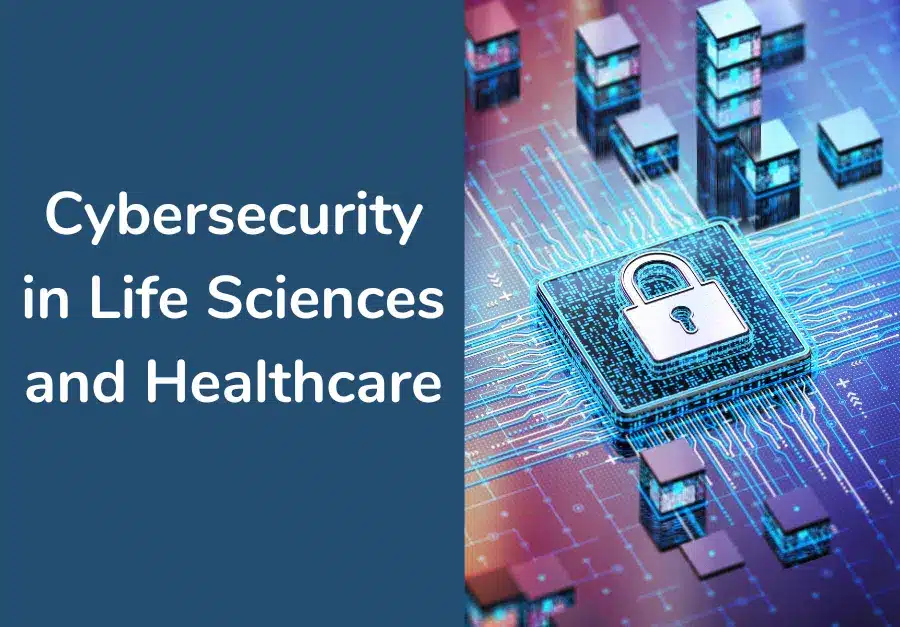
Course Details and Compliance Solutions:
This course gives you the tools to educate your workforce and the verifiable documentation to defend your compliance program.
Since the human factor is demonstrably the weakest link, the most effective and cost-efficient defense against ransomware and phishing is a robust staff training program. The goal is to move from a reactive position, waiting for the next breach, to a proactive one, where security is ingrained into every daily action.
Managing this training across IT, QA, clinical, and lab staff can be a huge challenge. The solution is to utilize standardized, expert-led training that not only covers the theory but also provides traceable, auditable documentation.
In life sciences, cybersecurity is a regulatory investment. The most powerful tool you possess against catastrophic ransomware and phishing attacks is the trained judgment of your employees. Investing in their education and demonstrating that due diligence is the best thing you can do to protect your IP, patient data, and operational continuity.
Don’t wait for a breach to find the gaps in your administrative safeguards.
Visit GxP-Training today to enroll your team in the “Cybersecurity in Life Sciences and Healthcare” course. This can transform your employees into your strongest security asset.