


Laboratory environments come with a unique set of risks. From handling volatile chemicals to managing biological samples and operating precision equipment, every step taken in the lab carries potential consequences. When that work is performed within a GxP setting, the stakes are even higher. A single safety lapse can put products, data, and even lives at risk. That is why proper OSHA lab safety training is not just a box to check. It must be meaningful, understood, and applied every day by everyone involved.
In this blog, we will take a closer look at who really needs OSHA lab safety training when operating in a GxP environment. We will also explain why the training should be tailored based on responsibilities, what regulators expect, and how smart preparation can build a stronger safety culture across your team. Whether someone is working at the bench or supporting lab systems from behind the scenes, this is training that can protect both people and processes.
In any laboratory, the potential for injury or contamination is always present. But in a GxP-regulated lab, the consequences of a safety failure stretch far beyond physical harm. Poor safety practices can compromise data integrity, halt production timelines, or even trigger regulatory citations. That makes OSHA lab safety training more than a formality. It is a major part of risk management and compliance.
Understanding chemical exposure limits, handling protocols, spill response procedures, and equipment use are all part of daily operations. If someone misunderstands a hazard label or skips a safety step, the ripple effect could affect products, patients, and the credibility of the entire organization. This is why every person working in or around the lab must not only receive training, but training that fits the context they are working in. When safety becomes part of how the lab operates, it is easier to prevent mistakes before they start.
In a regulated lab, safety training should never be reserved for just one team or department. Everyone who works in or around the laboratory needs a clear understanding of the risks and responsibilities that come with that space. That includes full-time lab technicians, part-time assistants, quality control staff, and even facility maintenance crews. If a person has access to the lab, they need to know how to protect themselves and others.
Training should reflect each person’s role. A microbiologist working directly with pathogens requires a deeper understanding of biological hazard protocols than someone restocking supplies. But both need to understand basic protective measures, proper waste disposal, and how to respond to an emergency. Even office-based staff who occasionally enter the lab for inspections or audits must receive orientation to lab rules. It only takes one person misunderstanding a procedure to cause a serious incident.
Making sure training is broad and role-specific reduces confusion and encourages shared responsibility. It also shows inspectors that safety is not just a checklist item, but a value integrated across the organisation.
Good OSHA lab safety training should be more than a policy. It should give your team the confidence to recognise hazards, handle chemicals correctly and take the right action if something goes wrong. Our OSHA Lab Safety Certified Training does exactly that. It’s designed for real lab settings so your people can apply what they learn the moment they step back into the lab.
This course helps staff:
On completion, your team receives a dated, traceable certificate accredited by CPD/CEU, showing they’ve covered what regulators look for. It’s a straightforward way to build trust and show your lab takes safety seriously.
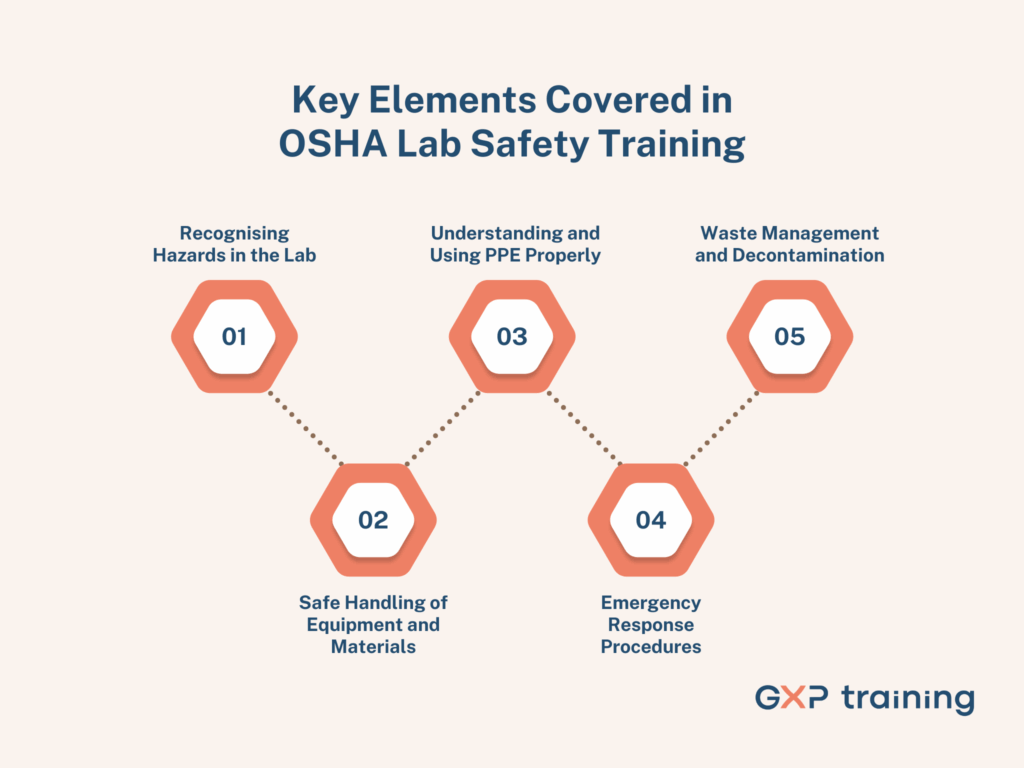
Before anyone sets foot in a GxP-regulated lab, they need to understand how to keep themselves and others safe. OSHA lab safety training is not just a regulatory box to tick. It is how teams learn to work confidently with chemicals, equipment, and procedures that come with real risks. The best training takes complex standards and turns them into clear, practical habits that staff apply every day.
Here are the most important components covered in a comprehensive OSHA lab safety course:
Together, these areas help build a sense of routine and responsibility across the lab. When safety practices are well understood, they become second nature. That not only protects individuals but also strengthens the entire operation. A team that knows how to spot risks, respond appropriately, and follow protocol will always be better positioned to meet both internal expectations and external inspections.
Lab safety depends on more than written policies or scheduled training sessions. It grows from a team’s daily habits, the way they approach tasks, and the level of care they show for one another. This kind of culture develops over time when expectations are clear and followed consistently.
Managers and supervisors have an important responsibility in shaping this environment. Their attitude toward safety influences how the rest of the team responds. When leaders treat protocols seriously and respond thoughtfully to concerns, it creates a standard that others respect. Teams also need open lines of communication. Staff should feel supported when they raise a concern or ask for clarification, even if they’re new or unsure. When people are encouraged to look out for each other and take responsibility for doing things right, safety becomes part of the daily routine rather than something that’s revisited only after incidents happen.
When everyone understands how to spot hazards, handle materials safely, and follow clear procedures, lab safety becomes part of daily work, not just a compliance checkbox. Our OSHA Lab Safety Certified Training is designed for real lab environments so your team can put what they learn into practice immediately.
We’re here to help with practical training and support to strengthen your safety culture and keep your lab program up to date.