

The first time an inspector asked me to show which risk tier we had assigned to a machine learning model buried inside our pharmacovigilance signal-detection tool, I did not have a good answer. The model had been live for over a year, quietly flagging adverse event patterns, and nobody on the quality side had ever classified it, validated it, or documented who was accountable for its outputs. That gap is exactly what regulators are now closing, and it is why EU AI Act training has moved from a nice-to-have to a compliance obligation for any life sciences team touching artificial intelligence in 2026.
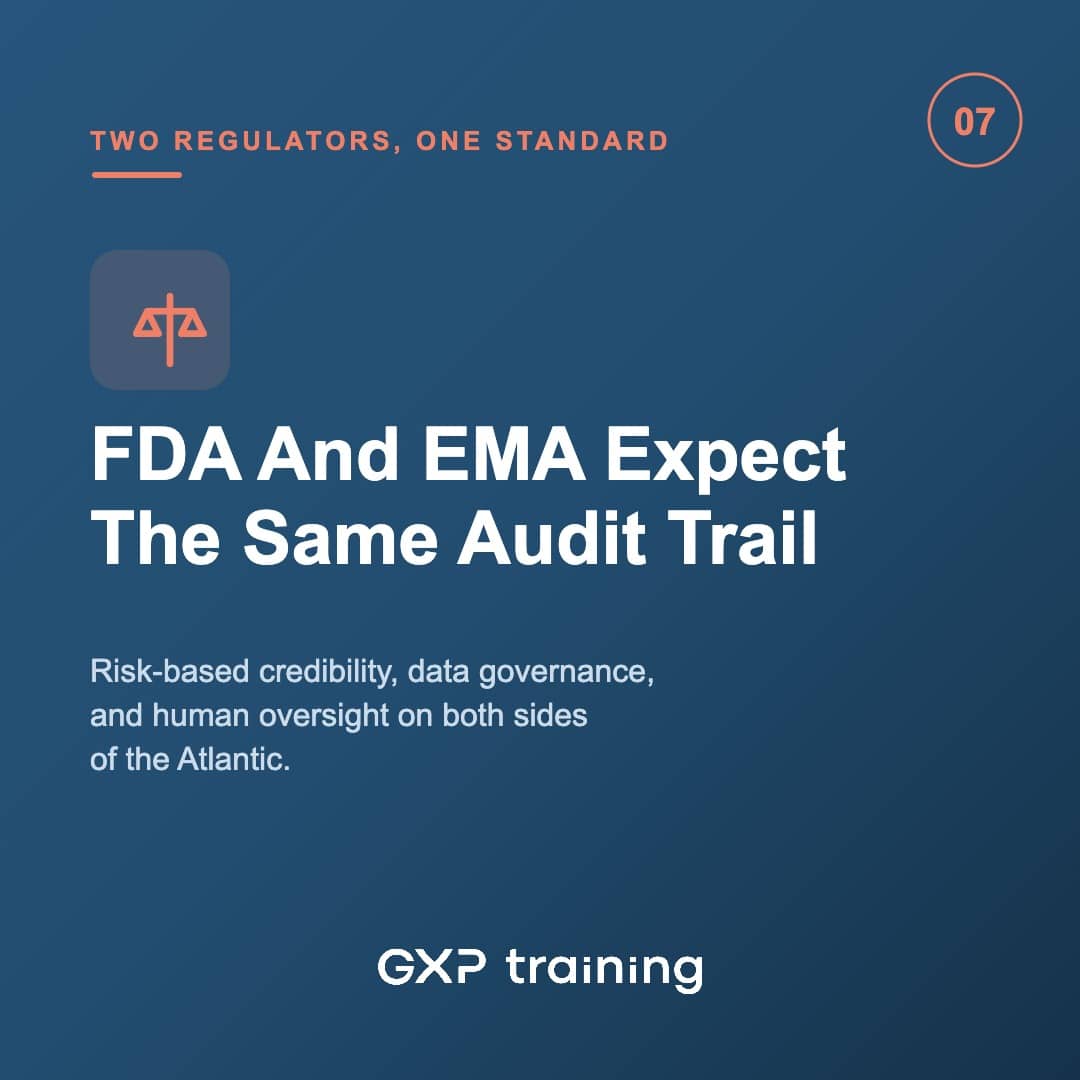
Both the FDA and the EMA have made their expectations explicit. The FDA’s draft guidance on the use of AI to support regulatory decision-making lays out a risk-based credibility framework that Center for Drug Evaluation and Research (CDER) now expects sponsors to apply across the nonclinical, clinical, manufacturing, and post-marketing phases of a product’s life. The EMA’s reflection paper on AI in the medicinal product lifecycle takes the same audit-ready posture, calling for documented risk management, human oversight, and data governance at every step from discovery to post-authorization. Put together with the EU AI Act’s binding obligations, the message from regulators on both sides of the Atlantic is the same: if AI touches a regulated process, someone in your organization needs to be able to explain, defend, and prove how it was governed.
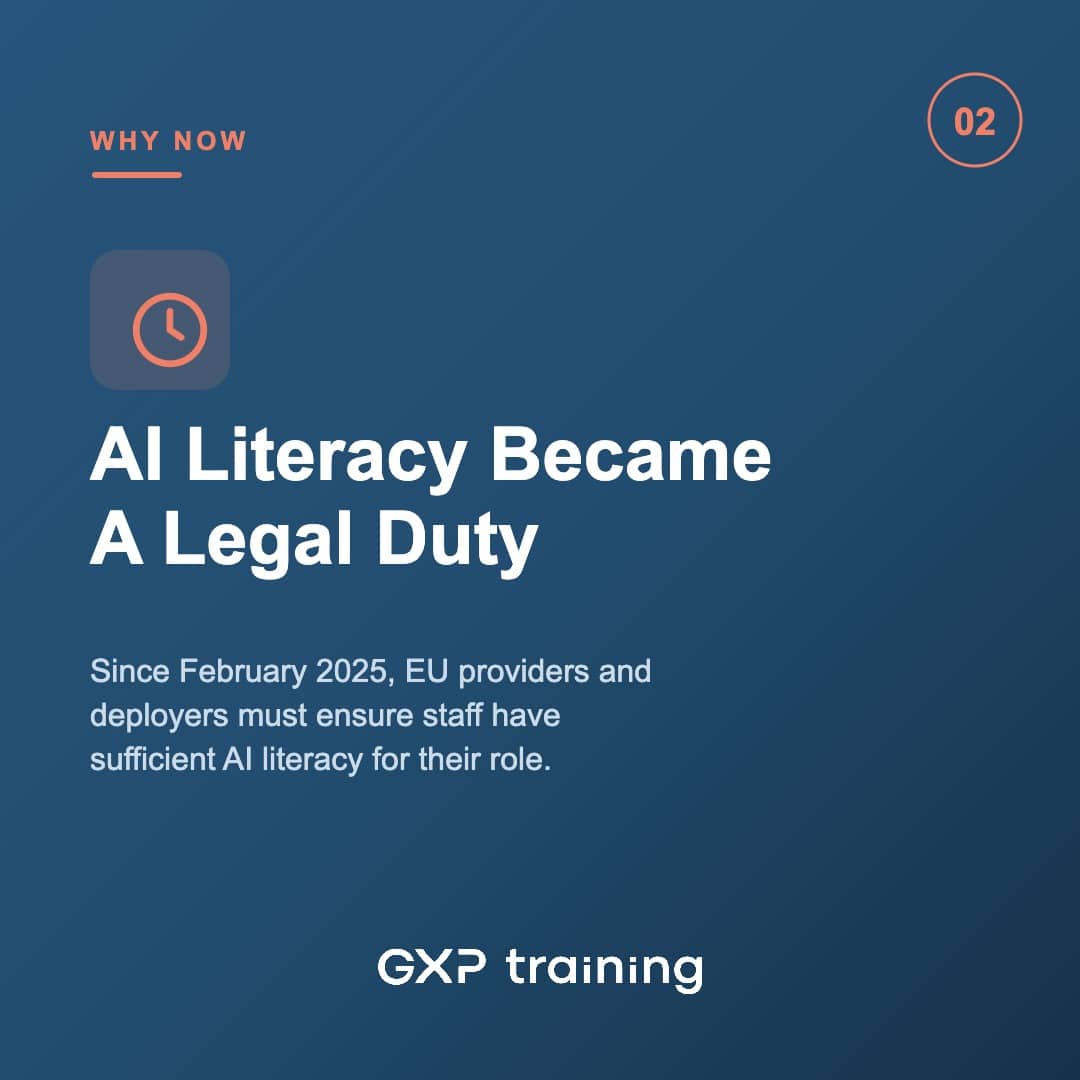
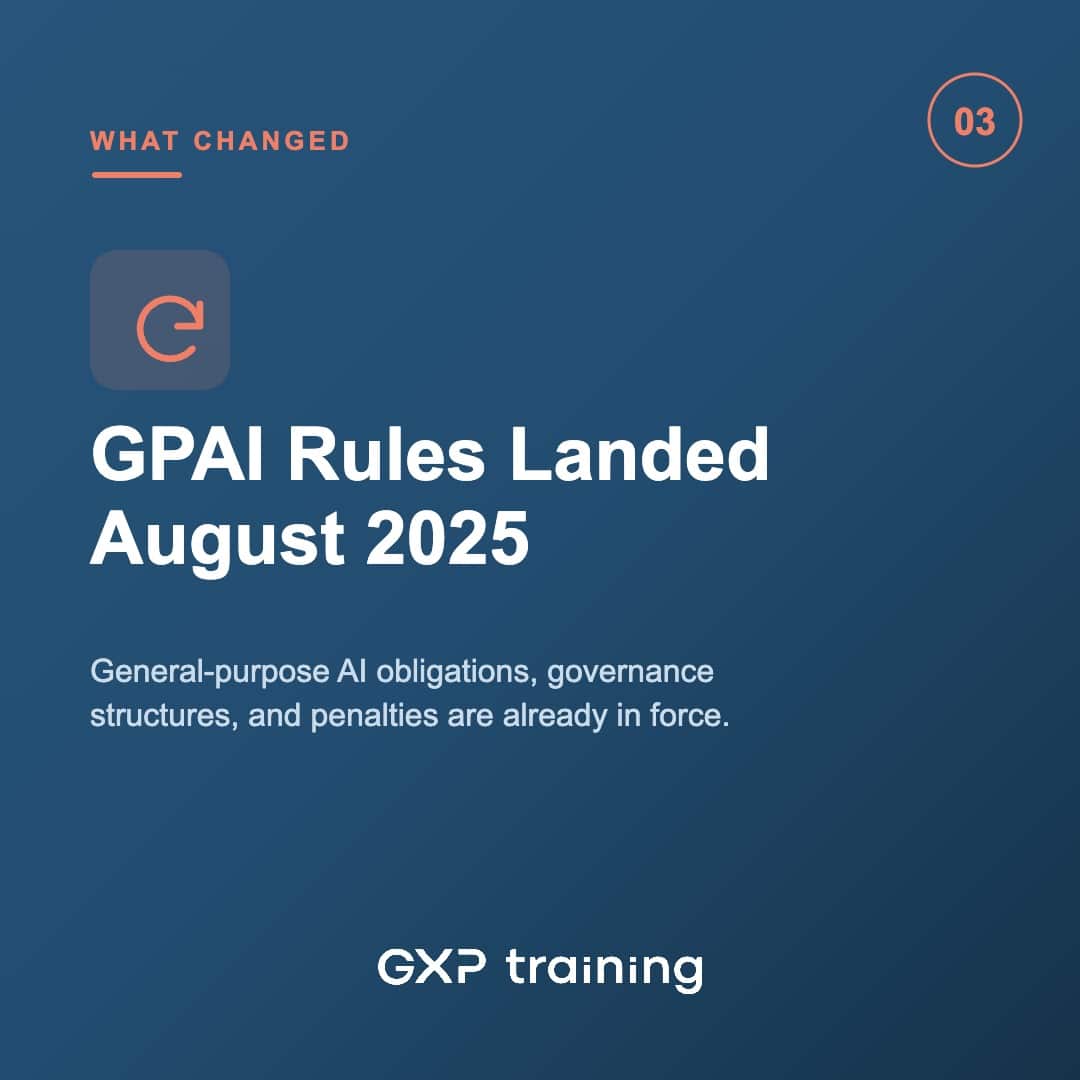
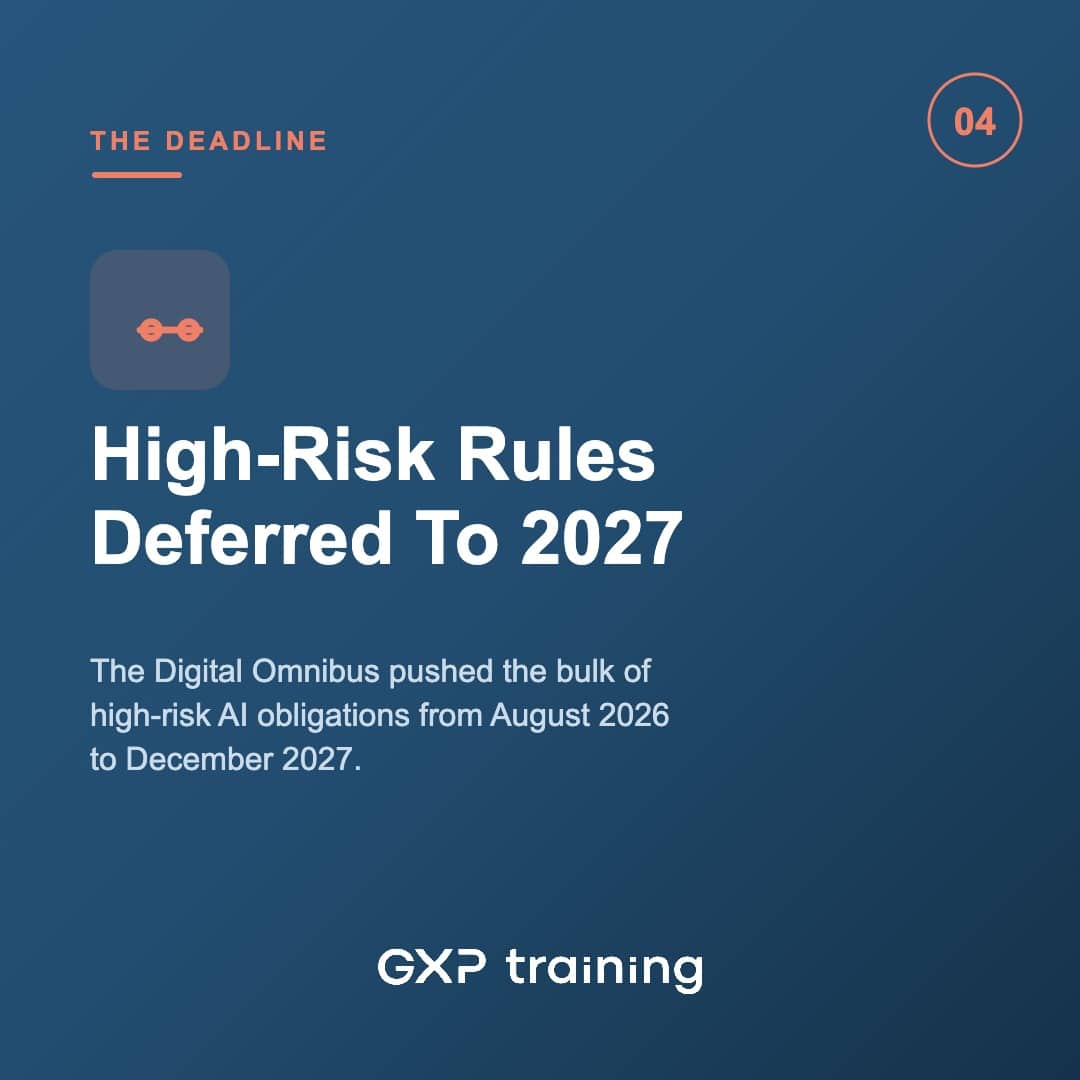
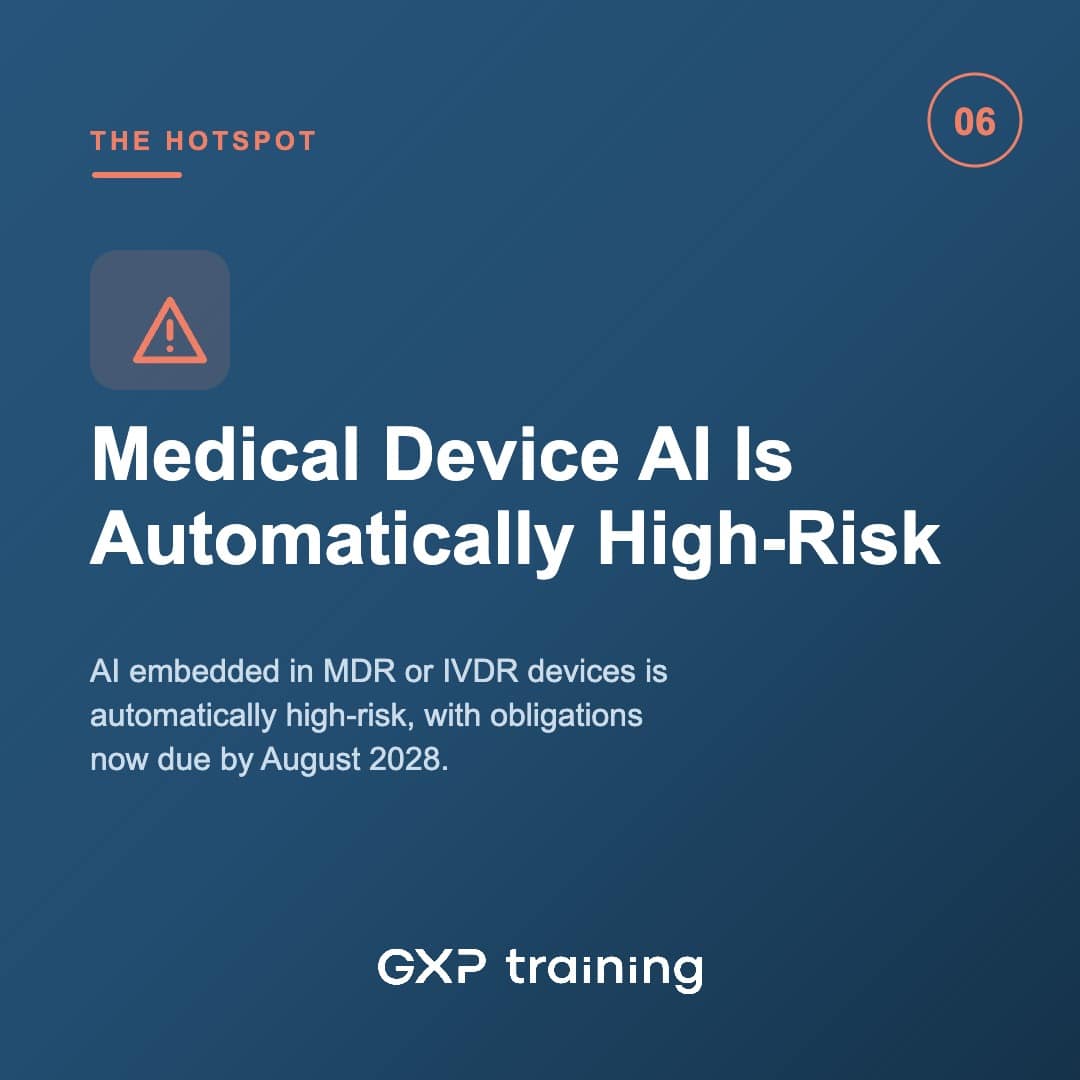
The EU AI Act (Regulation (EU) 2024/1689) has been phasing in since it entered into force in August 2024, and each phase has direct consequences for regulated organizations. The AI literacy obligation in Article 4 and the prohibited AI practices in Article 5 became applicable on 2 February 2025, meaning every organization deploying AI already has a legal duty to ensure staff have a sufficient level of AI literacy for their role. General-purpose AI model obligations, governance structures, and the penalty regime followed on 2 August 2025. The bulk of the high-risk AI system obligations, originally due to apply from 2 August 2026, have since been deferred under the Digital Omnibus on AI (Regulation (EU) 2026/1744), which entered into force on 27 July 2026. Standalone high-risk systems under Annex III now have until 2 December 2027 to comply, while high-risk AI embedded in regulated products under Annex I, including medical devices, has until 2 August 2028. Transparency obligations under Article 50 still apply from 2 August 2026, and the core obligations already in force, prohibited practices, AI literacy, and GPAI governance, are unaffected by the deferral.
For life sciences specifically, the stakes are higher than for most sectors. AI systems embedded in medical devices regulated under the MDR (Regulation (EU) 2017/745) or IVDR (Regulation (EU) 2017/746) are automatically treated as high-risk under the Act, with compliance obligations now due by 2 August 2028 following the Digital Omnibus deferral. AI used in recruitment, workforce management, or biometric categorization inside a pharmaceutical or CRO (Contract Research Organization) setting falls under the Annex III timeline instead, due by 2 December 2027. Either way, classification does not wait for the deadline: the organizations caught unprepared are the ones that never worked out which timeline applied until an inspector or notified body asked.
Even organizations with no EU footprint are not off the hook. The FDA’s January 2025 draft guidance, “Considerations for the Use of Artificial Intelligence to Support Regulatory Decision-Making for Drug and Biological Products,” is the agency’s first dedicated guidance on AI in the drug life cycle, and it sets an expectation that sponsors document the intended context of use, the risk to patients and to decision quality, and the evidence supporting a model’s credibility before it is used to support a submission. You can read the underlying framework directly on the FDA’s artificial intelligence in drug development page.
The EMA’s reflection paper on AI across the medicinal product lifecycle mirrors that expectation on the European side, addressing AI from early discovery through manufacturing and pharmacovigilance, and it explicitly calls out data governance, model validation, and human oversight as the pillars auditors will look for. Read the source paper on the EMA’s website. The overlap is not a coincidence: both frameworks converge on the same three pillars, data governance, model validation, and human oversight, which means a gap in one is very likely a gap in the other.
Having reviewed AI governance gaps across quality, IT, and clinical teams, the same failure points come up again and again:
Each of these gaps is fixable, but only if your organization treats AI governance as a state of control to be maintained, not a one-time checklist. Teams that combine a modern computer software assurance approach with dedicated AI oversight tend to close these gaps fastest, because both disciplines share the same risk-based, audit-ready logic.
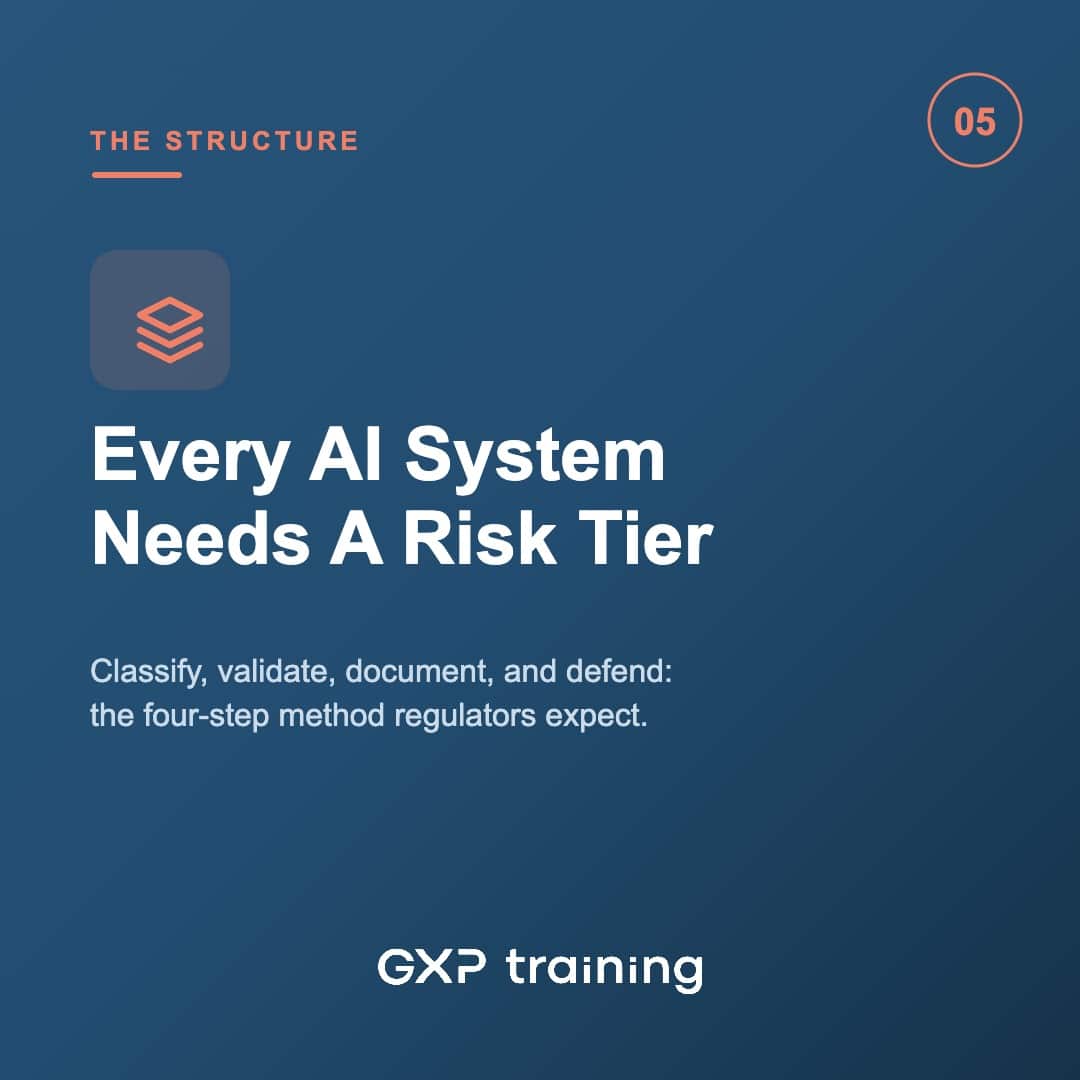
The organizations that are ahead of this curve follow a consistent pattern: classify every AI system by regulatory risk, validate it against its intended use before deployment, document the model’s data lineage and decision logic in language a non-technical auditor can follow, and assign a named owner who can defend the system if it is challenged. That four-part discipline, classification, validation, documentation, and named ownership, is the same sequence a well-built EU AI Act training course works through, and it is the sequence an inspector will implicitly follow when testing whether your governance actually holds.
Benchmark yourself honestly: if an inspector asked tomorrow for your organization’s AI system inventory, risk classifications, and evidence of AI literacy training, could you produce it inside a day? If the answer is no, that benchmark, not the calendar, is the real deadline, and it is exactly the gap a structured EU AI Act training program is built to close.
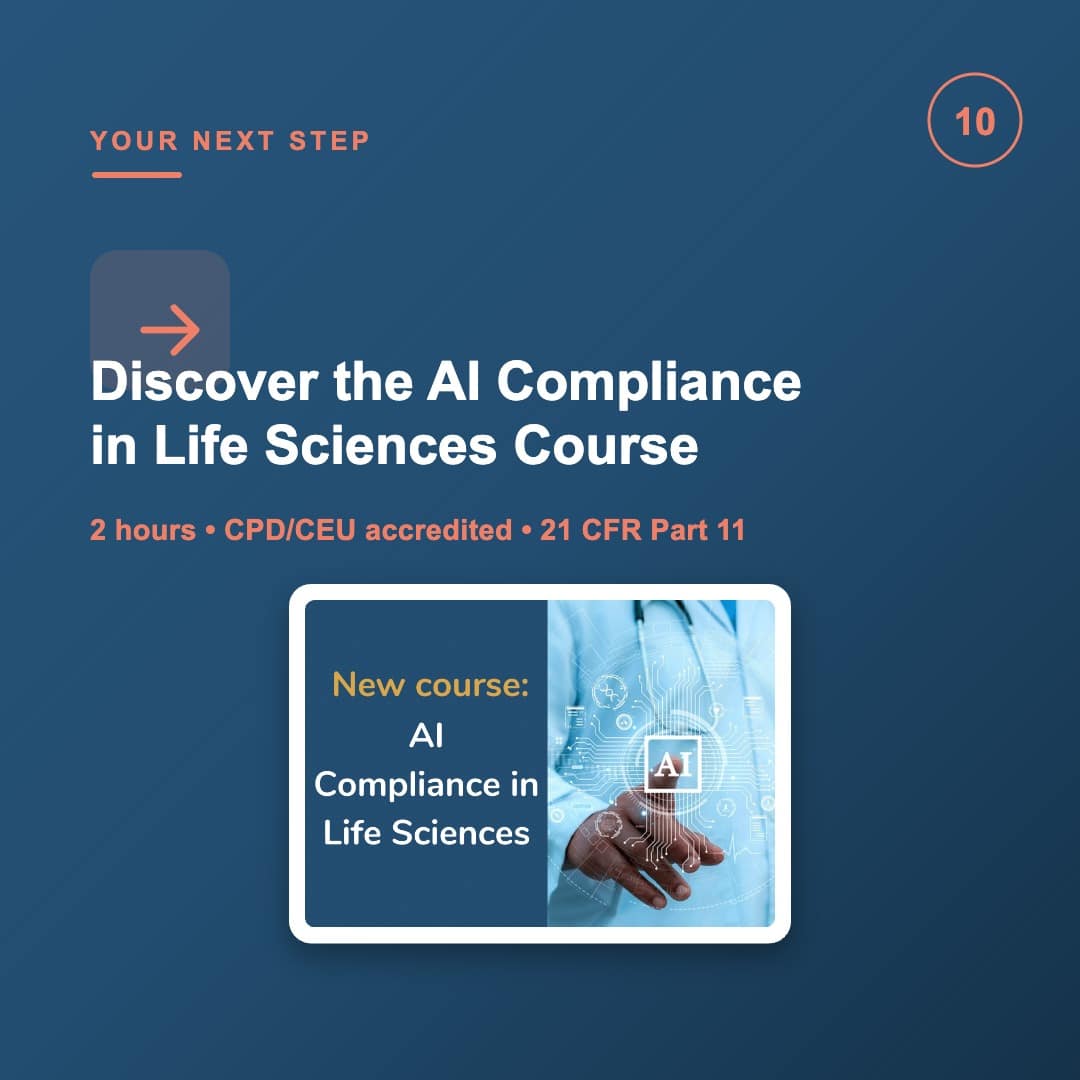
This course turns both the EU AI Act and the FDA’s AI guidance into one practical, audit-ready method your team can apply immediately, covering how to classify, validate, document, and defend every AI system deployed across drug development, manufacturing, pharmacovigilance, and quality. It is built by a team of Regulatory Affairs Experts with qualifications from Northeastern University, Boston, so the content reflects how inspectors and notified bodies actually assess AI governance in practice, not just what the regulatory text says on paper.

Course Details
Detailed Curriculum Overview
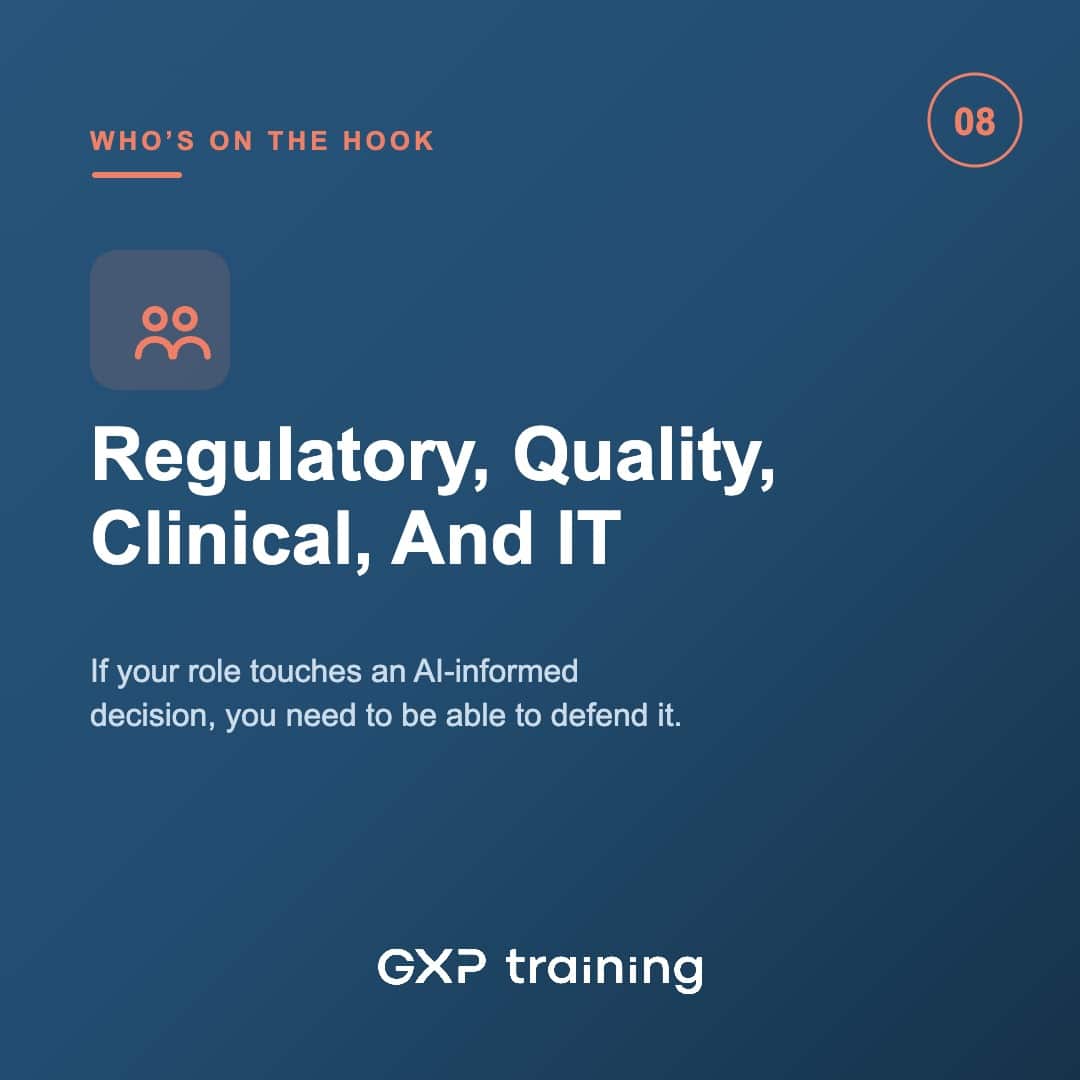
This training is built for the people who will actually be asked to defend an AI decision when an inspector, a notified body, or a client audit shows up. Regulatory affairs specialists need it to classify AI systems correctly under both the EU AI Act and FDA frameworks before a submission is built on top of an unclassified model, while quality assurance and CSV validation specialists rely on the same grounding to fold AI validation into their existing computer system validation programs rather than treating it as a separate, bolted-on process. Clinical operations, pharmacovigilance, and clinical data management teams need it just as much, since AI increasingly touches signal detection, trial candidate screening, and case processing, and a compliance gap in any of those areas has direct patient safety implications. Auditors and internal quality reviewers use this same body of knowledge to assess whether a colleague’s AI governance program would survive external scrutiny, and IT and digital health leads need it to make sure new AI tools are risk-classified and documented before they are ever deployed into a validated environment. Whatever your role, if you touch a system that uses AI to inform a regulated decision, this EU AI Act training gives you the shared vocabulary and method your whole organization needs to move at the same pace.
The return on this training is easiest to see in what it prevents. A single AI system found without a documented risk classification during an inspection can trigger a wider review of every other model in your portfolio, turning one finding into a multi-month remediation project. A rejected submission because an AI-supported dataset could not be defended under the FDA’s credibility framework costs far more in lost time than the two hours it takes to build the internal method to prevent it. In the 2026 market, clients issuing corporate training quotations are increasingly asking whether AI governance is already part of the curriculum, and vendors who cannot answer that question convincingly are losing shortlist spots to the ones who can. Training a cross-functional team now, before the next round of high-risk obligations lands, costs a fraction of retrofitting compliance after a warning letter or a notified body finding. Treating structured training on the EU AI Act as a benchmark investment rather than a compliance afterthought is what separates organizations that stay ahead of enforcement from those that scramble to catch up.
Every course in our catalog, including this one, is built by regulatory affairs experts who hold advanced qualifications and hands-on regulatory experience so what clients learn reflects how inspectors actually assess a program rather than a paraphrase of the regulatory text. Successful completion produces a unique, verifiable, CPD/CEU-accredited certificate that clients can share directly on LinkedIn, giving them tangible proof of competency that holds up in an audit or a job application alike. Access runs for twelve months and is fully self-paced, which matters for regulatory, quality, and clinical teams who cannot block out a fixed classroom week, and for corporate clients we layer in manager-level progress tracking and HR reporting tools so training compliance can be verified across an entire department in a few clicks. Course content is reviewed and updated monthly to keep pace with fast-moving frameworks like the EU AI Act and FDA AI guidance, and every course is SCORM-compatible for organizations that need to feed completion data into their own Learning Management System, LMS. That combination of expert authorship, verifiable credentialing, and flexible delivery is why life sciences teams keep coming back to GxP Training rather than building AI governance training from scratch.