


The FDA has shifted its expectations when it comes to computerised systems. Now, more teams need to understand the difference between CSA vs CSV training to work in line with the risk-based approach. Knowing which systems are critical and who needs what training helps you stay compliant and avoid wasted effort.
In this blog, we will explore the difference between Computer System Validation (CSV) and Computer System Assurance (CSA), explain who should receive which type of training, and present a practical framework for creating a training program that aligns with your team’s roles and the systems they support.
Computer System Validation is the traditional route for ensuring that systems perform as intended and maintain compliance. It is typically applied to systems that handle clinical trial data, patient information, or critical lab results. This method involves creating detailed requirements, writing and executing test cases, documenting evidence, and maintaining traceability throughout changes and updates. For high-risk systems, CSV is essential because regulators need assurance that data integrity and patient safety are fully protected.
Computer System Assurance takes a smarter approach. Instead of validating every system fully, CSA encourages you to identify which systems are genuinely critical to regulatory outcomes and apply rigorous controls only where risks are significant. A low-risk system might receive a lighter qualification process rather than the full CSV treatment. This refocuses effort on systems that truly matter and avoids unnecessary overhead.
As we think about training people, it becomes clear that different roles require different levels of knowledge. Not everyone needs to go through the full CSV training process. Many staff can be equipped with essential CSA principles as long as the approach ensures compliance and transparency.
Getting CSV and CSA right means your team needs training that’s practical and clear. Our Computer System Validation (CSV) course explains the full validation cycle, shows how to apply risk-based CSA principles, and helps people use GAMP 5 guidance confidently in real work.
This course includes real-world examples, clear instructions for each project phase, and role-specific tips that help people handle their part without confusion. When they finish, they receive a CPD- and CEU-accredited certificate to prove they’re ready for audits and inspections.
Key benefits include:
When your team has the right knowledge, they work smarter, reduce risks, and stay inspection ready.
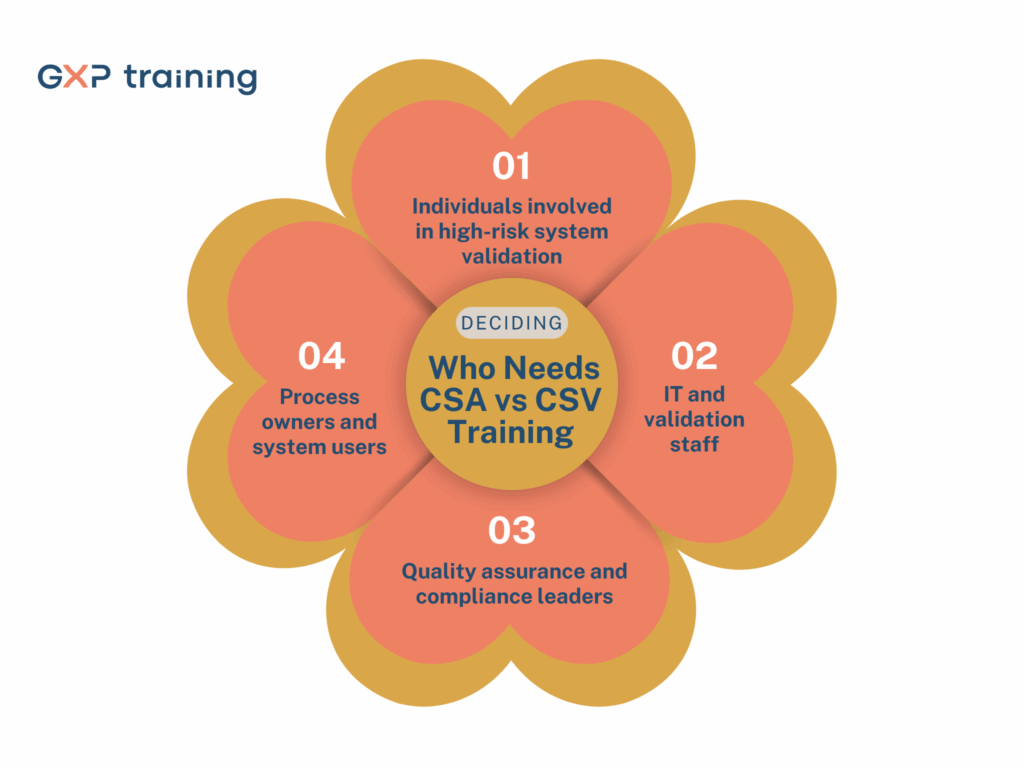
To make training truly effective, it must match each person’s duties and engagement level with the systems. Here is how training should be assigned across roles:
Understanding these distinctions makes it easier to design training programs that are not only compliant but also meaningful and manageable for each team, helping everyone stay aligned and confident in their responsibilities.
Creating a CSA vs CSV training plan that actually works involves practical steps and real examples. The goal is not to overwhelm staff with information. Instead, training must connect with what people do every day.
Start with a workshop that maps your system inventory to risk categories. Let participants define which systems they manage and decide whether CSV or CSA should apply. By involving them in that classification, you build shared understanding and buy-in.
Follow that workshop with focused training sessions. For example, provide a hands-on CSV module that takes learners through a full validation cycle for a sample system. Work together through writing a requirement, creating test scripts, executing tests, documenting results, and managing change controls.
In parallel, provide CSA sessions that teach risk methods such as risk assessment grids, determining qualification thresholds, and maintaining documentation. Show examples of how this applies to real business systems that don’t directly impact patient data but still need oversight.
End with a joint session where both CSA and CSV-trained staff come together. Pose a system and have each person classify it, explain their reasoning, and receive feedback. This step ensures everyone understands the full picture and can support each other.
When people receive training that’s truly relevant to what they do each day, the difference is easy to see. Staff feel more involved and less frustrated. They are not wading through material that doesn’t apply to them, so they stay focused and absorb the content more effectively. For validation professionals, that might mean feeling equipped to write clear user requirements, track and trace outcomes, assess risk, and implement controls that meet both regulatory and operational needs.
Those in IT or infrastructure roles often feel uncertain about where their responsibilities begin and end in a regulated environment. Targeted training helps them understand how to document systems properly, when compliance thresholds apply, and how to evaluate risks without overcomplicating the process. It also gives them confidence to ask the right questions and push back when needed.
For managers and quality leaders, role-specific training creates trust across the team. It means that decisions are being made in a consistent, traceable way. Documentation is clearer. Actions are aligned with both the level of risk and the scope of work. When inspections happen, this structure stands out. Regulators and auditors recognize when a team has put thought into their approach, rather than applying the same blanket methods to every scenario.
Morale improves, too. Staff know they are not being asked to guess. They are supported with the right knowledge and tools to do their jobs well. They make fewer mistakes, which reduces rework and saves time. Departments operate with more confidence and less friction. And when audits come around, teams feel prepared because they understand the expectations and can speak to their own processes without hesitation.
Finally, having a clear, risk-based training structure shows leadership commitment. It tells your staff that their time matters and that your organisation is serious about quality, not just compliance. That mindset filters down into the day-to-day, helping everyone focus on doing the right thing, the right way.
Our Computer System Validation (CSV) training course helps your team understand exactly when to apply CSV versus CSA, giving staff the real-world knowledge they need to handle systems properly and prove compliance when it matters most. The course is practical, straightforward, and designed to build confidence across roles.
If you want help designing a risk-based training plan that fits how your people really work, just reach out. We’re here to help you get it right from day one.