


Signing up a clinical trial on ClinicalTrials.gov can feel straightforward, but the real task comes afterward. Behind the process is a web of regulations, accurate data entry, timeline commitments, updates and corrections. Staff who skip clinical trials training stumble over details, miss deadlines or enter information incorrectly. This can lead to warnings or complications down the line. So this raises a question: do you need to invest time in training your team before diving in?
In this blog we explore the importance of getting your team ready before registration. We will walk through what kind of knowledge is required, why it matters for trial compliance and credibility, and how proper preparation can save effort and reduce risk later on.
Registering a trial means publishing key information publicly. If a date is wrong, a contact person is misnamed or a primary outcome gets posted incorrectly, it can erode confidence with regulators and participants. Once information is online it cannot simply be deleted. Corrections need to be made transparently in the record and explained. What looks like a small mistake can snowball into reputational damage or audit findings.
Training also helps staff understand timing requirements. For example there is a rule that information must be posted within 21 days of enrolling the first participant. Registrations must be updated at least every 12 months and anytime a major change occurs. Without training, mistakes often happen in the timeline and updates get delayed or missed entirely.
Registries are public-facing so the language and formatting matter. Unclear descriptions, stray characters or inconsistent terminology can make a trial look badly organised. With training, staff learn to use consistent style, clear terminology and to preview entries before submission. This kind of polish builds credibility.
Getting your trial registered correctly means your team needs practical knowledge, not just theory. A single mistake on ClinicalTrials.gov can cause real headaches, so the right training helps your staff feel confident and stay on top of timelines, rules, and record updates.
Our Registration of Trials on ClinicalTrials.gov course is designed for real-world use. It explains what sponsors and investigators are responsible for, what approval and reporting steps matter most, and how to manage details so nothing slips through the cracks. The training includes clear examples, simple guidance on WHO and ICTRP criteria, and shows exactly what happens before and after registration.
When you complete the course, you get a verified certificate that shows you have learned the key skills needed to handle the process properly. It is flexible enough to fit around your work, and every module is easy to follow.

Some of the features you get:
Together, these tools help your team register trials confidently and meet every requirement without added stress.
A strong clinical trials training program should cover three key areas:
Platform mechanics
First, users need to understand the mechanics of ClinicalTrials.gov. That includes how to create user accounts, manage access permissions, work with multiple sponsors or collaborators and use validation checks before submission. The training should include a live demo or tutorial where staff step through every page of the submission form.
Content accuracy
Next comes the details of what to enter. Training should cover the difference between study status and recruitment status, how to summarize outcomes clearly and how to enter contact information that will be used by patients or press. Staff need to understand exactly where protocol documents go and how to enter start and end dates consistently. Real world examples of both correct and problematic entries help solidify these rules.
Timing and compliance
Finally, training should focus on compliance requirements. Staff need to understand timelines for posting results, what happens if deadlines are missed and how to handle protocol changes in the registry. This section should include guidance on what to do if the Institutional Review Board changes a plan or a study merges with another. When preparing staff for these scenarios, you make sure they know how to respond proactively rather than scramble at the last minute.
It is important to give the right level of training to the right people. That often means multiple roles:
Regulatory or compliance staff
These specialists need to know the full set of requirements as they carry ultimate responsibility. They benefit from deep training in content and timelines, and understanding how to handle audits or FDA feedback.
Clinical trial coordinators
They are usually managing the timeline of milestones. They should be trained on what qualifies as a reportable change, how to use the platform, how to track zoo of deadlines and how to notify sponsors or governance groups.
Data entry specialists or interns
Even staff with only a data entry role must understand content guidelines and formatting rules. They should learn how to write lay summaries and where to find source documents.
PI or study leadership
Because the principal investigator often signs off on entries, they should at least have a refresher on regulations. That ensures they do not sign off on information that has gaps or errors.
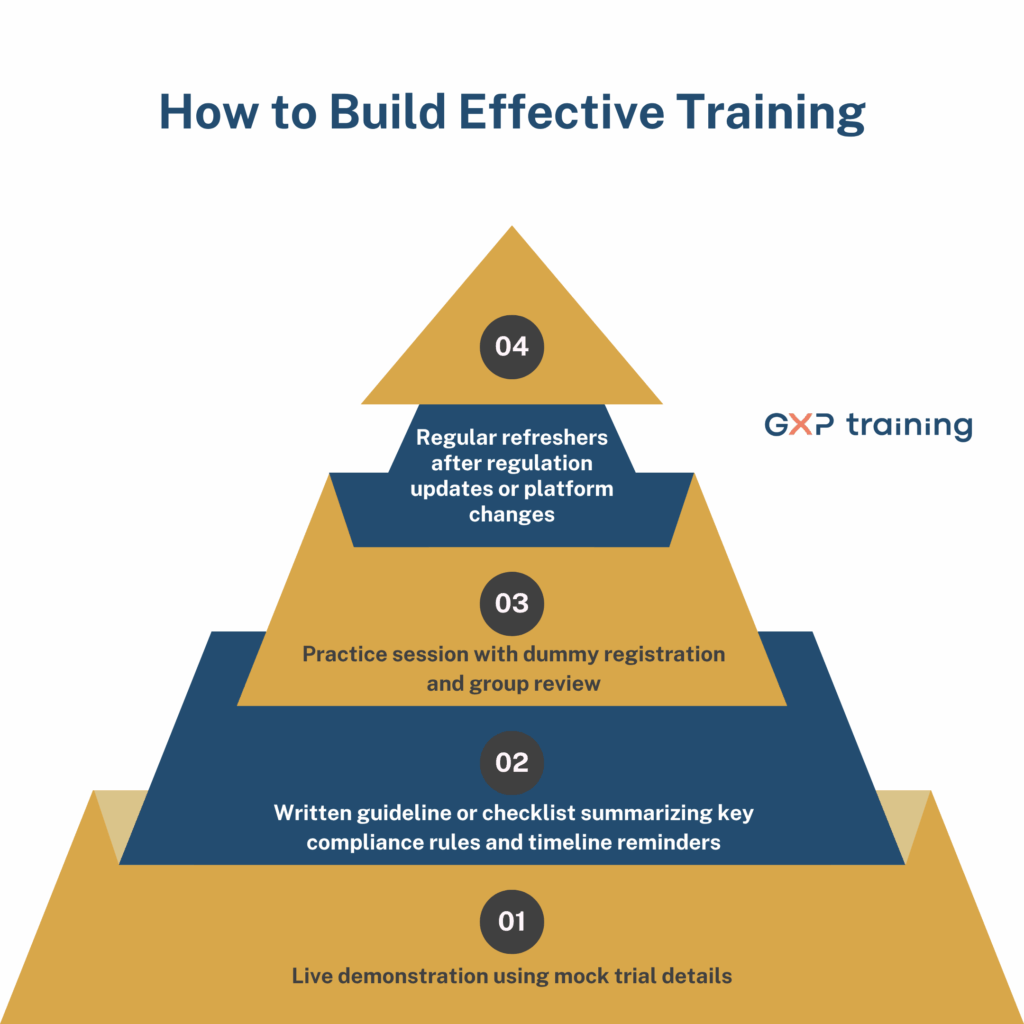
Clinical trials training doesn’t need to be long and dry. A focused, practical approach makes all the difference. Here are four ways to build training that actually works:
Walk your team through each stage of registration using a fictional trial. Show them how to enter data, what each section means, and where people often make mistakes. Seeing it all in action takes the pressure off and helps staff feel more familiar with the system before they use it for real.
Provide a simple reference document that outlines what information needs to be gathered, how long each step usually takes, and any common deadlines. When staff have a reliable guide to check against, they’re less likely to miss something important or delay a submission.
Have your team complete a full mock registration. Afterward, review it together. Talk through what worked, where errors popped up, and how they might handle similar challenges in the future. This hands-on exercise makes the training more memorable and highlights where extra support may be needed.
As the registry evolves, so should your training. A quick review session every time there’s a system update or new guidance helps your team stay current and confident. These short check-ins reinforce key lessons and ensure nobody falls behind.
This mix of hands-on, written and group review ensures staff remember the lessons and apply them confidently when the real registration happens.
When a team understands how to register a trial correctly on ClinicalTrials.gov, the entire process runs more smoothly. Accurate entries reduce the need for corrections later on, which can otherwise cause delays or trigger requests for clarification from the registry. A properly trained team is also more likely to meet submission deadlines, which helps demonstrate compliance and supports the transparency that regulators, funders, and oversight bodies expect.
Beyond the technical benefits, training also builds confidence. When staff have had the chance to walk through the platform, learn the language, and understand how entries are reviewed, they approach the task with more clarity and less stress. This results in quicker submissions and fewer mistakes. It also means sites can open studies on time without being held back by registration issues.
For trial sponsors and institutions, this kind of preparation reflects well. When registrations are clear, timely, and complete, it shows that the study is being managed with care. Funders, IRBs, and even potential participants see that professionalism, and it builds trust. In the long run, these small advantages create a stronger foundation for every study your team runs.
The clearer your team is about how to register a trial, the smoother your study runs. This training helps everyone understand their responsibilities, avoid mistakes and maintain trust with regulators and stakeholders.
If you want practical, certified training that matches how clinical teams really work, our Registration of Trials on ClinicalTrials.gov course is ready when you are. And if you would like help choosing the right mix of courses for your team, just contact us. We are here to help you build training that actually works.